Why do I put this item up?10.2196/mhealth.6893Original PaperClinical Evaluation of the Measurement Performance of the Philips Health Watch: A Within-Person Comparative Study
1Innovation Site Eindhoven, Philips, Eindhoven, Netherlands2Philips Research, Eindhoven, Netherlands*all authors contributed equallyCorresponding Author:Lieke GE Cox, PhDPhilips ResearchHigh Tech Campus 34Eindhoven, 5656AENetherlandsPhone: 31 40 27 91111Fax:31 40 27 91111Email: lieke.cox [at] philips.comABSTRACTBackground: Physical inactivity is an important modifiable risk factor for chronic diseases. A new wrist-worn heart rate and activity monitor has been developed for unobtrusive data collection to aid prevention and management of lifestyle-related chronic diseases by means of behavioral change programs.Objective: The objective of the study was to evaluate the performance of total energy expenditure and resting heart rate measures of the Philips health watch. Secondary objectives included the assessment of accuracy of other output parameters of the monitor: heart rate, respiration rate at rest, step count, and activity type recognition.Methods: A within-person comparative study was performed to assess the performance of the health watch against (medical) reference measures. Participants executed a protocol including 15 minutes of rest and various activities of daily life. A two one-sided tests approach was adopted for testing equivalence. In addition, error metrics such as mean error and mean absolute percentage error (MAPE) were calculated.Results: A total of 29 participants (14 males; mean age 41.2, SD 14.4, years; mean weight 77.2, SD 10.2, kg; mean height 1.8, SD 0.1, m; mean body mass index 25.1, SD 3.1, kg/m2) completed the 81-minute protocol. Their mean resting heart rate in beats per minute (bpm) was 64 (SD 7.3). With a mean error of −10 (SD 38.9) kcal and a MAPE of 10% (SD 8.7%), total energy expenditure estimation of the health watch was found to be within the 15% predefined equivalence margin in reference to a portable indirect calorimeter. Resting heart rate determined during a 15-minute rest protocol was found to be within a 10% equivalence margin in reference to a wearable electrocardiogram (ECG) monitor, with a mean deviation of 0 bpm and a maximum deviation of 3 bpm. Heart rate was within 10 bpm and 10% of the ECG monitor reference for 93% of the duration of the protocol. Step count estimates were on average 21 counts lower than a waist-mounted step counter over all walking activities combined, with a MAPE of 3.5% (SD 2.4%). Resting respiration rate was on average 0.7 (SD 1.1) breaths per minute lower than the reference measurement by the spirometer embedded in the indirect calorimeter during the 15-minute rest, resulting in a MAPE of 8.3% (SD 7.0%). Activity type recognition of walking, running, cycling, or other was overall 90% accurate in reference to the activities performed.
Conclusions: The health watch can serve its medical purpose of measuring resting heart rate and total energy expenditure over time in an unobtrusive manner, thereby providing valuable data for the prevention and management of lifestyle-related chronic diseases.
Trial Registration: Netherlands trial register NTR5552; http://www.trialregister.nl/trialreg/admin/rctview.asp?TC=5552 (Archived by WebCite at http://www.webcitation.org/6neYJgysl)
I put it up to show how medical grade devices better be accurate. They will get tested, and they just have to perform or they will NOT be adopted into a health care system. So if a Tier 1 changes a sensor- good for them. So they test it with 100 people. Hopefully they do it as in this study-compare the accuracy to a gold standard. Just like this study....these devices will be tested before adopted...
Thanks to Ricks q....
Rick Neaton
Okay. I heard you mentioned when talking about I think B to B IoT products or some of B to B use. Can you provide some additional color or examples of what this type of product would be and how it would be used?
Brian Faith
Yeah, definitely. So just to clarify why B to B has been to this business, there is typically two ways that our wrist worn device could get on us as consumers, one way is we go down to our consumer electronics to buy it our self which has been the historical way of buying wearable products. The other is that you could actually get the wearable product sent to you by a hospital or your insurance provider and they subsidize the majority of the cost of that, and you agree to wear it because you agree that they have being able to see how active you are for example, during the day.
That’s one business model that’s being guided by a lot of these insurance companies because they’re trying to promote wellbeing in the employee base for companies or their general [inaudible]. Another way that you could imagine as going to market is that you have some condition and you’re in a hospital and you’re going through treatment and the doctor would like to understand more about you and your activity, maybe your heart rate as you go through your treatment process away from the hospital. And having his wearable devices allows them to do that, not necessarily it’s something you would go buy and go to Best Buy to buy but something that you would be dictated to wear by your doctor.
So that’s what we mean by B to B. And we’re seeing a lot of interest in that because having a sense of more wellbeing about us is a really good input for the doctor to modulate what they’re prescribing for you to do, and just get a sense of your activity. So, the analogy we give, the car insurance companies today they’ll give you a lower rate if you take that little dongle and stick it in your car, same thing with insurance for people.
Rick Neaton
Right.
Brian Faith
You wear this one thing, they’ll subsidize some of your insurance as long as you’re open to wearing the technology.
Rick Neaton
Do you have any estimates of the size of this particular market in terms of dollar volume as it stands within the entire wearable or hearable market?
Brian Faith
I don’t have a figure in front of me Rick, but I know just some of the volumes that these people are quoting, it’s definitely in the tens of millions because of all the people that are out there that are being insured. One characteristic I’d say about this market in particular, it’s probably going to be more stable and have less churn and less lumpiness than the consumer market. Consumer market is always holiday driven, or at least it tends to be. Design change every year because consumer taste changes every year. I don’t think the same thing is true for this other market.
And it’s also worth noting that, I think there was an article published a couple of weeks ago but I think the FDA is actually listening some of the restrictions on getting products qualified through the FDA for use in these types of environment. Historically FDA was really slowdown the innovation in this area but I think they realized that if they can leverage consumer product design in this environment as long as they go to a light weight qualification with FDA, everybody benefits by that. And I think prices [ph] and acknowledgement have been market ...
So I will track Phillips along as they are now of great interest to investors in the QUIK business.
-
Please note they are due for a serious upgrade to this device?
Philips Health Watch review
by Reece Armstrong
11 September 2017
15:50
RSS
Print
The choice of fitness wearables on today’s consumer market is staggering. Wearables now offer a range of solutions for customers’ fitness needs making the days of food diaries quite redundant. Whilst the appetite for wearables is slowing down, the number of products on offer certainly aren’t.
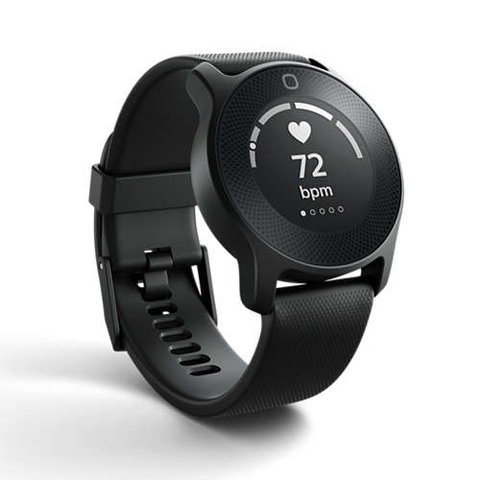
Credit: Philips
I was particularly curious about the Philips Health Watch as it has been designed as a medical device, rather than as a wearable fitness device. In fact, the decision to test it came after a conversation with Jeroen Tas, chief innovation and strategy officer at Philips. I often have trouble sleeping and Jeroen recommended the Health Watch to help me monitor my sleeping patterns.
After receiving the Watch, which I wore for a period of around six weeks, I quickly set it up by easily syncing it with both my phone and the Philips HealthSuite app. After entering information about myself, such as weight, height and gender, the app and Health Watch were good to go.
Upon first use the device was fairly easy to navigate, featuring a touch-sensitive dial around the watch face that you use to browse through menus and data. Information is clearly displayed, though the device’s status a health product is evident by the lack of third-party apps and software.
The Health Watch automatically tracks your heart rate, steps and calories, and detects what types of cardio you’re doing based on walking, running or cycling. I tested out the Watch during various exercise sessions and found that it tracked my heart rate fairly accurately and was quick to detect changes in my exercise. If you’ve been stationary for too long the watch vibrates and tells you to get moving. Considering the dangers of sedentary behaviour – which has been linked with type 2 diabetes, cancer and your metabolism, the notifications are a nice reminder for you to get up and move around.
What really lets the device down is its design, which is fairly unimposing. The Philips Health Watch features an all-black design alongside a strap that feels fairly flimsy. The upside is that the watch itself is sturdy and you don’t need to be worried if you accidentally knock it. Its unassuming design might appeal to some but it’s certainly one of the more aesthetically lacking devices on the market.
The monochrome display is another disappointing feature of the Health Watch. Menus are easy to read but the lack of colour makes the whole display dull and uninspired. This is all to save battery life and the Health Watch does boast an impressive charge, coming in at four days. Better yet is the charger, which snaps on nicely to the back of the Health Watch and gives a full charge in under an hour.
The HealthSuite app is also a mixed bag. Information is cleanly displayed and each health metric has a range of data that you can view. When you first open the app it asks you what health goal you’d like to achieve; whether you’d like to lose weight, get more active or simply track your habits. From there you can set calorie targets and get more insight into how healthy you are. The app uses a traffic light system across the week so you can easily check to see if you hit your targets for any particular day. Unfortunately, there are no customisation options for the app, meaning you have a plethora of menus to search through, some of which you won’t be using unless you have other Philips connected devices.
The sleep tracking function of the Health Watch and the app is functional and informative, if not slightly limited. You need to tell the Watch when you are going to sleep and notify it when you wake up; a small annoyance as many other fitness products automatically track when you fall asleep. Even so, the Watch will you how long you slept for and the app displays the quality of your sleep with sleep stages and times in the night when you wake up. Sleep stage information is annoyingly limited to one day meaning you can’t view in detail how you’ve slept on other days.
What is good?
That they have been doing this for several yrs already and have probably learned a LOT on how to make it more useful the next go round?
Our win in Europe?
A new Phillips health watch should be at the top of our list to track along with?
-
this article was written by a Phillips guy...
Clinical Wearables: Navigating the Next Health Technology Boom
These are the three questions vendors need to answer during research and development for their clinical wearable to be adopted enthusiastically by hospitals, patients, and doctors.

Ravi Kuppuraj
October 27, 2017
Digital Health
FacebookTwitterLinkedInEmail

Wearables have undoubtedly made their mark in the health and wellness industry. With the market slated to double in size by 2021 as vendors plan to ship a total of 125.5 million wearable devices this year, according to the International Data Corporation, tracking your steps during your work day, your reps during your workouts and even analyzing your personal sleeping patterns has become the new normal. While consumer wearables have seen a monumental level of success across the board, clinical wearables have struggled to reach a similar level of notoriety until recently.
SO notice they split wearables just as Rick has written on...consumer and CLINICAL.
However, in the past several years we have seen healthcare professionals become increasingly vocal regarding the groundbreaking capabilities that medical wearables must offer for patients, especially in tackling the extensive monitoring needed for some of the most common chronic diseases such as COPD and diabetes. As clinical wearables continue to grow in popularity, it’s important to remember that innovation doesn’t happen in a vacuum. There are three key considerations that vendors need to make during the R&D process for these to successfully be integrated into day-to-day use in the hospital for both physicians and patients.
What’s the End Goal?
Connected Sensing is not something that was developed by accident—it stemmed from a growing need for a deeper understanding of patients’ needs that were failing to be acknowledged. With 44 percent of the general population surveyed in the Philips 2017 Future Health Index stating that a recommendation from a healthcare profession would be their deciding factor in adopting connected care technology such as a wearable, patients are looking to their physicians and their health systems for guidance during the digital health revolution. Medical grade
connected sensing technologies ultimately could change the way healthcare is practiced in lower-acuity, general care areas. The process needs to be intentional and solutions need to be created with a deep understanding of not only physicians’ needs, but also patients’ previously unmet needs.
Has the Process Been Collaborative?
Throughout the creation process, it is important to have a collaborative relationship with everyone in hospital systems—including clinicians, executives, and patients—to make clinical wearables a reality. People in healthcare can be skeptical of new technology and its potential impact on their workflow. If clinical wearables are going to make their way mainstream, vendors need to consider the various needs and perspectives of the end user. Deploying clinical wearables on a large scale requires the vendors to deliver on the vision and functionality of the technology, while it is up to the providers, payers, and patients to share candid feedback. This type of collaborative process will help bring clinical wearables to the next level.
Has the Technology Been Developed with the Patient in Mind?
As physicians push for an industry-wide buy-in for clinical wearables, they will be unable to fully execute this initiative without support from patients. While these devices will collect a wide assortment of data using more sophisticated sensing, capture, and analytical functionalities, creating clinical wearables with the patient in mind is critical. Everything from size and versatility to level of comfort must be considered if vendors and physicians hope for clinical wearables to have their full potential impact.
The healthcare industry is no stranger to the rise of emerging technologies and their potential impact as new medical devices and systems continue to be developed and brought to market on a regular basis. However, there is a specific degree of collaboration and intent that needs to be established if healthcare professionals are anticipating a clinical wearable boom of a comparable degree to their consumer counterparts. Once this occurs, we will all be witness to an industry-wide acceptance of clinical wearables technology as their capabilities become engrained in the thinking and process that clinicians utilize as they work to overcome some of the most widespread issues in healthcare. The universal adoption of clinical wearables serves as a significant component to the overall mission of connected care and brings us another step closer to improving the overall health of the population.
Ravi Kuppuraj
Ravi Kuppuraj is business leader for the Connected Sensing Venture at Philips.
-
Spend a few minutes here...
https://www.usa.philips.com/healthcare/innovation/research-and-exploration/connected-sensing
Just one snip
Vital signs tracking and patient management in the general ward
Forty percent of unanticipated deaths occur in the general ward1. Our medical-grade wearable biosensor provides measurements for at-risk patients in low acuity settings from the ED to the general ward, care providers can assess and respond to patients whose conditions may be declining.
Will the day come when all pts wear a medical grade wearable?
Anyway thanks to Ricks Question we have reason to track Phillips along. They are very well suited to deliver such a device...
-
Ravi Kuppuraj, Ph.D.
Advances in Sensing Technologies and the Increasingly Complex Needs of our Healthcare System – how are they influencing each other?
Biography
 Ravi heads the Connected Sensing and Wearables Venture (CSV) at Philips. Ravi is a medical industry entrepreneur, with over 20 years of experience in patient monitoring, and healthcare IT. Prior to CSV, Ravi co-founded and served as the CTO at InfoBionic, that developed MoMeTM – a cloud-based, universal patient monitoring solution with unprecedented analytics that allows physicians to quickly and accurately diagnose and treat patients.
Ravi served as the Vice President of Research and Development at Draeger Medical, a global powerhouse in patient monitoring, anesthesia delivery, and respiration, and headed R&D efforts at SpaceLabs Medical, in Seattle, where he was instrumental in driving the development of key technologies and products in patient monitoring solutions, and was the General Manager for their India operations. In addition
Earlier in his career, Ravi was involved with several successful med-tech startups, including CardioNet, Pharsight, and IMACS. Ravi holds an MBA from the University of North Carolina at Chapel Hill, a PhD and MS in biomedical engineering from Louisiana Tech University and University of Miami respectively, and a BSEE from Bangalore University.
Consider that our Tier 1 and the European B2B device are similar in being medical/clinical focused devices?
-
For casual readers here is the snip...
In addition to the traditional consumer use cases for wearable products, we’re also seeing more interest from companies that are addressing emerging B to B applications. OEMs that are addressing B to B applications believe there is significant volume potential as hospitals, insurance companies, fitness companies and others leverage sensor data to track activity and biometric information.
We recently won a design with a European OEM that is addressing the B to B market with a new wearable device that utilizes our EOS S3 as the host and sensor processor and its embedded FPGA as a display driver. We expect this design will enter production during Q1 2018.
As a mental model I am using the next Phillips health watch or a device almost exactly like it.
UNG NEWS
Samsung's Simband set to live on inside new health monitoring devices
The wearable on steroids is helping to shape the company's health tech plans

Wednesday
October 18, 2017
By Husain Sumra
@hsumra
Back in 2014, Samsung unveiled the Simband, a reference wearable that was packed with sensors. It was never intended to go on sale to consumers and was instead designed for developers to play around with.
Those developers were able to use sensors that tracked blood pressure, skin temperature, sweat production, blood volume, heart rate and more. The Simband was considered a reaction to rumors the Apple Watch would be a revolutionary health device. When that turned out to not be the case, Samsung turned its attention to the Galaxy Gear instead.
Read this: The ultimate guide to Samsung Health
The Simband isn't dead though, according to Dr. Francis Ho, Samsung's head of digital health. Samsung Innovation and Strategic Center has still been plugging away on the project with researchers and companies for the past couple of years.
"We invited researchers to come in and use it to do new kinds of studies," he told us. "So we work with many of these top groups in the world and they use it for everything from autism studies to heart arrhythmia studies."
Samsung has also been making investments in digital health to improve upon the Simband. Externally, Samsung has been strategically investing in health-based startups. Internally, it's been developing new technologies for future sensors. Samsung doesn't want to make any announcements yet, but Ho says the company is looking to take ideas from the Simband to build into new commercial products that can health improve health.
Samsung still believes in its "Voice of the Body" concept, which wants to make it as easy as possible for the human body to communicate health information to you through sensors. This includes things like your current state of health, but also studying the environment that affects your health, from the food you eat to your sleep quality. Also included in this idea is the idea of helping to predict or detect cancer at an earlier stage to make it easier to treat.
It's nice to see that Samsung is still immensely serious in health. It's easy to forget, as Samsung Mobile has taken the lead on wearables with the Gear devices. It turns out another Samsung division, Samsung Innovation and Strategic Center has still been plugging away on the future of wearable health monitoring devices.
Commentary-this is a tool for them to work on SERIOUS health. It does NOT look to B a 5th wrist device on shelves.
-
So this is it most likely. Has not been seen for a while...
Now the time delay sort of makes sense.
It certainly is a new category for Samsung.
Will it sell when it comes to market.
Perhaps they will sell it differently and get insurance companies to send them out?
Without QUIKs words I had thought this thing will NOT come to market. A research project.
But again it has NOT been seen for several yrs now, so we don't know how it has evolved.
Last edited:
Today at 6:58 AM
-
Samsung To Combine Simband Concepts Into New Health Devices
October 18, 2017 - Written By Manny Reyes
Samsung looks to borrow concepts from the Simband platform it launched in 2014 as a reference for new health monitoring devices it plans to build in the near future, according to Francis Ho, chief of digital health at the company. For those who are not familiar with Samsung Simband, as it has stopped making the rounds in the internet quite a while back, it was a proof-of-concept announced three years ago in a bid to respond to the imminent debut of Apple Watch in the same year. The company intended for Simband to gather health data through monitoring sensors incorporated into the platform.
The platform was a major part of the Samsung Architecture Multimodal Interactions (SAMI) program meant not as a commercial product, but as a resource to help developers build devices that could track blood pressure, heart rate, sweat production, oxygen levels, glucose levels and other bodily activities related to human health. The idea was for SAMI to collect and analyze those pieces of data. Samsung later shifted its focus to the Samsung Gear family of smartwatches and away from Simband after the South Korean company saw that the Apple Watch did not significantly shake the health devices market. A few years later, it turns out that the original equipment manufacturer has still been silently developing Simband through its tech investments arm Samsung Innovation and Strategic Center. Ho revealed that for the last few years, Samsung has been working with researchers and other companies to perform new health-related studies that use ideas from Simband. That means it is possible that the Simband concept could still be introduced into future health monitoring devices as Samsung has been heavily investing in digital health monitoring tools and solutions created by external startups and in new sensor technologies built inside its own labs.
It would have been interesting to see how developers would have been able to create health monitoring apps by gaining access to information uploaded by Simband-based devices to SAMI through the cloud. Nonetheless, Samsung has been advancing its efforts in this segment with the Samsung Health app embedded in the Gear family of wearable devices. It remains to be seen what role Simband concepts will play in Samsung’s push to beef up its position in the health device market.
SO it looks like we will find out in '18...I wonder what they will name it?
So we will have 2 medical grade devices shipping in first half '18?

